
A Most Critical Material
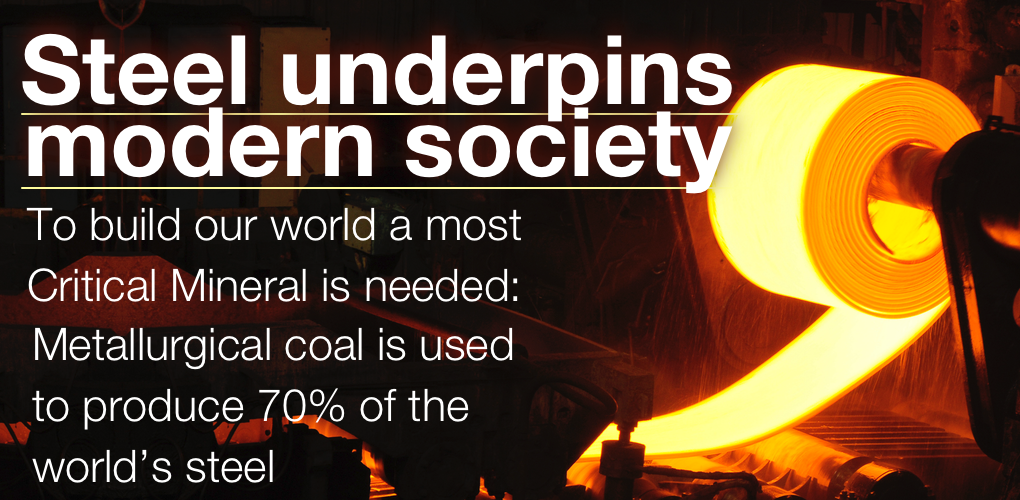
Steel underpins modern society. As the world builds, urbanization increases, infrastructure expands and new technologies emerge to help meet soaring energy demand, steel is the essential material making it happen. And it is metallurgical coal that is used to produce 70% of the world’s steel.
Metallurgical coal is a critical, strategic material that underpins economic and national security the world over. It should be no surprise then that the European Union has recognized metallurgical coal as a critical material for more than a decade. It’s past time the U.S does the same.
As the E.U. sees it, critical materials are the foundation of a strong industrial base, supporting a broad group of industries, enabling modern technology and are closely linked to the deployment of advanced energy technology. On every account, metallurgical coal fits the bill.
As the U.S. aims to reindustrialize, reshore supply chains and rebuild its infrastructure, isn’t it time we recognize metallurgical coal as the critical material it clearly is?
A Foundational Piece of the U.S. Industrial Base
The U.S met industry is enormously important to our own industrial base and to our trading partners. America’s 163 met mines – with additions expected this year – support nearly 13,000 jobs. The U.S. is the world’s third-largest met coal exporter, behind only Australia and Mongolia, with U.S. coal reaching more than 70 nations.
Our allies count on the security and reliability of U.S. energy and materials production. Ensuring the availability of U.S. met coal in the global marketplace must remain a foundational piece of our national and global security policy as we push back against governments that are working to weaponize critical material supply chains.
Consider the importance of U.S. met coal to Ukraine. Before Russia’s invasion, Ukraine was producing 21 million tons of steel annually, accounting for a fifth of total Ukrainian exports. Ukrainian production fell to 6.2 million tons last year and is under further pressure as fighting takes place in the heart of Ukraine’s met coal producing region. With domestically produced steel absolutely critical to the war effort, Ukraine is increasingly turning to U.S. met coal to keep its blast furnaces running.
U.S. government data shows that 502,425 short tons of U.S. met coal made its way to Ukraine through September of 2024, compared to just 41,697 short tons in 2023. That’s a significant jump that underscores the importance of American production for our allies.
The U.S. metallurgical coal industry is a deeply critical piece of the U.S. industrial base. Now is the time to recognize this material – and its production – for exactly what it is.
- On February 26, 2025