
Choosing Energy Insecurity
Europe is once again reaping the rewards of its energy policy failures. Natural gas prices are surging, jumping 30 percent in the past two months to reach a two-year high. Cold, windless weather has meant rapidly depleting gas storage and rising prices.
For the lucky few, dispatchable fuel diversity is helping temper price spikes. In Germany, coal generation has jumped to fill the gaps left by persistently uncooperative weather to alleviate gas demand. The same thing is happening in Poland, with coal generation rising there as well.
Europe has been battered by the scourge of dunkelflaute, or dark doldrums, that have rendered countless billions in renewable investments all but useless. In Germany, for example, windless weather earlier this month meant the nation’s vast, exorbitantly expensive wind fleet has at times produced just 5 gigawatts of power, a fraction of its 70 GW of installed capacity.
Germany is running out of fingers to count how many dunkelflaute episodes it has endured this winter. In November, during a 12-day stretch of deeply uncooperative weather, German wind output dropped all the way to 0.2 GW. If not for being bailed out by electricity imports, Germany would have faced blackouts.
German policymakers are having to come to grips with the nation’s urgent need for both more dispatchable power and fuel diversity to shield the nation from natural gas price volatility. Leading German utilities are all beginning to echo a familiar refrain: the coal fleet must remain available for the foreseeable future. The nation’s planned coal phaseout simply isn’t compatible with reality.
Keeping coal generation available – to provide fuel diversity and meet rising power demand – is gaining traction on both sides of the Atlantic.
“More Expensive and Less Stable”
New Secretary of Energy Chris Wright began his tenure by making the addition and preservation of baseload, dispatchable power a priority. He said DOE will focus on adding resources, not taking them away. That’s a critical and deeply welcome change from the prior administration.
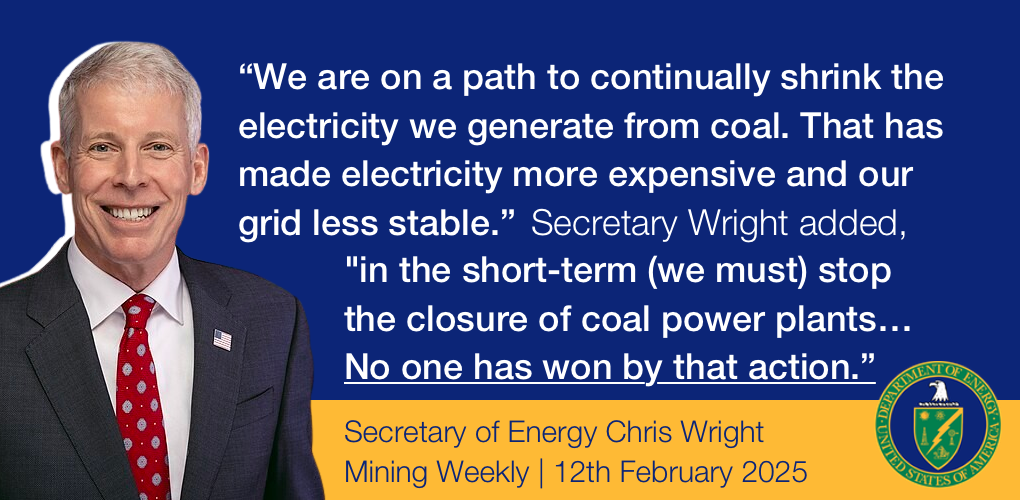
Specific to coal, he said this week that the U.S. should stop the closure of coal plants noting, “We are on a path to continually shrink the electricity we generate from coal… That has made electricity more expensive and our grid less stable.”
Not only does the U.S. need far more power to meet surging demand, but so much of the capacity and enabling infrastructure the Biden administration was counting on to replace existing capacity isn’t materializing.
The addition, or lack thereof, of high-voltage, interstate transmission infrastructure is case in point. So too is the ongoing unravelling of offshore wind projects, once the flagship effort of Biden’s DOE.
In New Jersey, the third major offshore wind project has been abandoned by its developer over ballooning costs. Energy giant Shell wrote off its 50% stake in Atlantic Shores, a proposed 2,800 megawatt project, choosing to take a $1 billion loss instead of completing the project.
As The Wall Street Journal pointed out, ratepayers are the big winners. Atlantic Shores would have been guaranteed power prices about three times the market rate, forcing ratepayers to overpay by $48 billion over the wind farm’s lifetime. A truly princely sum for power ratepayers were soon to find out would often disappear when it’s needed most.
As power demand soars and proposed sources of generation fail to materialize, today’s existing dispatchable capacity is only growing in value. That’s particularly true of the coal fleet and the fuel security and diversity it underpins for much of the nation.
Europe’s energy policy missteps are the gift that keeps on giving for American policymakers. For anyone willing to watch and learn the lessons are painfully obvious. Energy insecurity and crippling dependence on the whims of the weather are a path we need not take.
- On February 12, 2025